


Table of Contents
- Alhamd Islamic University Quick Facts
- History of Alhamd Islamic University
- Is Alhamd Islamic University Recognized by HEC?
- Mission and Educational Philosophy
- Governance and Legal Structure
- Alhamd Islamic University Quetta Campus
- Alhamd Islamic University Islamabad Campus
- Admissions at Alhamd Islamic University
- Fees and Scholarships
- Research, QEC and ORIC
- University Research Journals
- Campus Facilities and Student Support
- Why Consider Alhamd Islamic University?
- Alhamd Islamic University Contact Details
- Author Note
Today, Alhamd Islamic University offers undergraduate, associate, postgraduate and doctoral education in fields including computer science, management sciences, education, Islamic studies, languages, international relations, law, engineering technology, sports sciences and allied medical sciences. However, the programs available differ between the Quetta and Islamabad campuses and may also change from one admission session to another.
This guide brings together the university’s history, legal status, HEC recognition, campuses, academic departments, current programs, admission process, research activities and contact information.
Alhamd Islamic University Quick Facts
| Detail | Information |
|---|---|
| Official name | Al-Hamd Islamic University |
| Common name | Alhamd Islamic University |
| Abbreviation | AIU |
| Educational foundation | Alhamd Educational System, 1995 |
| University charter | Balochistan Act II of 2005 |
| University type | Private |
| Principal campus | Quetta, Balochistan |
| Islamabad Campus | Established in 2015 |
| Recognition | Higher Education Commission of Pakistan |
| Main academic levels | ADP, BS, B.Ed, MBA, MS, MPhil and PhD |
| Main admission portal | AIU online admission portal |
| Current Islamabad intake | Fall 2026 |
History of Alhamd Islamic University
Foundation of the Alhamd Educational System in 1995
The history of Alhamd Islamic University begins with the Alhamd Educational System, also called AES. The system was established in 1995 with the aim of promoting education across different sectors.
Before the university was formally chartered, AES had already developed and operated several educational and research institutions. These included the Balochistan Institute of Technology, BIT Girls College, Dar-e-Arqam School of Islam and Modern Sciences, Dar-e-Arqam Girls College and the Quran Research Academy.
These earlier institutions created the academic and administrative foundation from which Alhamd Islamic University later developed.
Establishment of Alhamd Islamic University in 2005
Alhamd Islamic University was legally established through The Al-Hamd Islamic University, Quetta Act, 2005, formally identified as Balochistan Act II of 2005.
The Act was:
- Passed by the Balochistan Assembly on March 31, 2005
- Assented to by the Governor of Balochistan on April 18, 2005
- Published in the Balochistan Gazette on April 20, 2005
The legislation formally established Al-Hamd Islamic University and gave it the status of a corporate degree-awarding institution. It also identified Quetta as the university’s principal seat.
Under the Act, the university received the authority to:
- Admit and examine students
- Offer approved courses of study
- Award degrees, diplomas and certificates
- Conduct teaching and research
- Establish academic departments, institutes and laboratories
- Publish research and academic work
- Create additional campuses with prior government approval
The Act also states that the university may establish campuses at other locations following government approval. This provision formed the legal basis for the university’s later expansion beyond Quetta.
Why Quetta Is the Main Campus
The university’s founding Act clearly states that its principal seat is in Quetta. For this reason, Quetta is described as the Main Campus of Alhamd Islamic University.
The Main Campus is located on Airport Road, Quetta, Balochistan. It houses the university’s central academic, administrative and governance structure and offers programs through departments covering technology, business, education, Islamic studies, social sciences, Urdu, physical education and allied health sciences.
Establishment of the Islamabad Campus
Alhamd Islamic University expanded its academic presence to the federal capital through its Islamabad Campus.
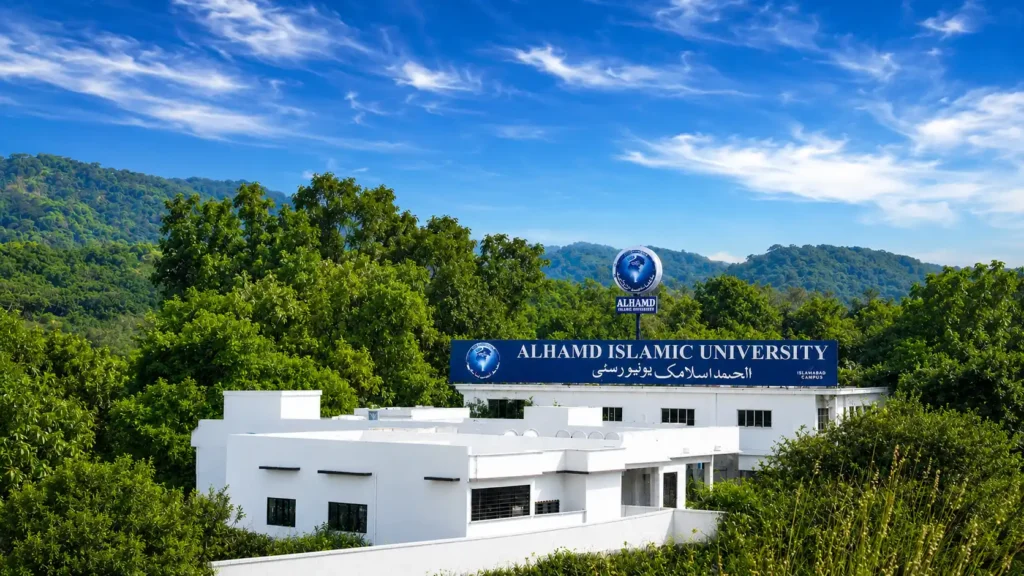
The Islamabad Campus was established in 2015 and operates in Shahpur, Bara Kahu, Islamabad. The university’s campus-information page classifies it as a private, recognized campus and states that it does not offer distance education.
An important historical distinction should be maintained:
Alhamd Islamic University was chartered in 2005, while its Islamabad Campus was established in 2015.
Some wording on the Islamabad Campus website associates the university charter with 2015. However, the official university Act confirms that the legal charter dates to 2005. The year 2015 relates to the establishment of the Islamabad Campus rather than the original establishment of the university.
Is Alhamd Islamic University Recognized by HEC?
Yes. Alhamd Islamic University is recognized by the Higher Education Commission of Pakistan.
The university appears in HEC’s official directory of recognized universities, where the institution is listed under Balochistan with its principal campus in Quetta. It is also included in HEC’s general list of recognized higher education institutions.
Is the Islamabad Campus HEC Recognized?
Yes. The Islamabad Campus of Alhamd Islamic University is also recognized.
HEC’s official recognized-campuses directory lists:
- University: Al-Hamd Islamic University, Quetta
- Recognized campus: Islamabad
This means that both the university’s Quetta Main Campus and its Islamabad Campus are included in the official HEC recognition structure.
Students should still remember that university recognition and professional program accreditation are not always the same thing. Programs such as law, engineering technology, computing, nursing and allied health may also fall under relevant professional or accreditation councils. Applicants should verify the current program-specific status before taking admission.
Mission and Educational Philosophy
Alhamd Islamic University presents its academic mission as a combination of competency-based education, professional knowledge and Islamic values.
Its stated mission emphasizes preparing students who are academically capable, ethically responsible and spiritually grounded. The university aims to help graduates deal with modern professional challenges without separating education from moral and religious development.
The Islamabad Campus similarly describes its educational approach as one that combines modern academic standards with character building, student support and ethical responsibility. Its current institutional vision is led by President and Founder Prof. Dr. Shakeel Roshan.
Governance and Legal Structure
The Al-Hamd Islamic University Act establishes a formal governance framework for the institution.
The university’s legal officers and authorities include:
- Patron
- Chancellor
- Rector
- Board of Governors
- Academic Council
- Board of Advanced Studies and Research
- Deans
- Directors
- Registrar
- Treasurer
- Controller of Examinations
- Selection Board
- Finance and Planning Committee
According to the Act, the Governor of Balochistan serves as Patron, while the Rector acts as the university’s chief academic and administrative officer. The Board of Governors supervises the institution’s academic, administrative and financial affairs.
Alhamd Islamic University Quetta Campus
The Quetta Main Campus is the original and legally designated principal campus of Alhamd Islamic University.
Its departments include:
- Management Sciences and Commerce
- Computer Science
- Engineering Technology
- Education
- Physical Education
- Islamic Studies
- Social Sciences
- Urdu
- Nursing and Allied Health Sciences
The campus also provides access to admissions, examinations, academic downloads, journals, scholarships, alumni resources and research-related facilities.
Quetta Department of Management Sciences and Commerce
The Department of Management Sciences and Commerce offers education in business administration, management, commerce and accounting-related fields.
Programs listed for the Quetta Campus include:
- PhD Business Administration
- MS Business Administration
- Executive MBA
- BS Business Administration or BBA
- BS Commerce
- BS Accounting and Finance
- ADP Commerce
- ADP Business Administration
The department states that its academic focus is on developing knowledge and practical skills relevant to management, commerce and the corporate sector.
Quetta Department of Computer Science
The Department of Computer Science focuses on computing education, problem-solving, technology and research.
Programs associated with Quetta include:
- MS Computer Science
- BS Computer Science
- BS Information Technology
- ADP Computer Science
- ADP Information Technology
- ADP Software Engineering
The current department page also lists different computing programs by campus, so applicants should confirm the exact availability of each program for their chosen intake before applying.
Quetta Department of Engineering Technology
Engineering Technology programs at the Quetta Campus include:
- BS Civil Engineering Technology
- BS Electrical Engineering Technology
The department’s academic direction focuses on applied technical education and preparation for technology-based professional roles.
Applicants to Engineering Technology programs should separately verify the latest accreditation status with the relevant professional council.
Quetta Department of Education
The Department of Education offers teacher education, educational research and advanced academic pathways.
Programs listed for Quetta include:
- PhD Education
- MPhil Education
- BS Education
- ADP Education
- B.Ed 1.5 Years
- B.Ed 2.5 Years
The department describes its educational approach as one that combines academic knowledge with social responsibility, reflective practice and professional preparation.
Quetta Department of Physical Education
The Physical Education department offers programs related to sports, teaching and physical education.
Programs include:
- BS Physical Education
- Senior Diploma in Physical Education
- ADP Physical Education
Program titles and current admission availability should be confirmed from the latest admission portal or prospectus.
Quetta Department of Islamic Studies
The Department of Islamic Studies offers academic study and research in Islamic thought, history, theology and related disciplines.
Programs listed for Quetta include:
- PhD Islamic Studies
- MPhil Islamic Studies
- BS Islamic Studies
- ADP Islamic Studies
A typical ADP Islamic Studies pathway runs for two years and covers areas such as the Quran, Hadith, Fiqh, Seerah, Islamic history, culture and civilization.
Quetta Department of Social Sciences
The current Social Sciences programs to be presented for the Quetta Campus are:
- BS English
- BS Economics
- BS International Relations
- BS Political Science
Older university pages may display additional social-science degrees. However, programs such as BS Sociology, BS Fine Arts, BS Psychology, BS Social Work, BS Journalism, BS Mass Communication, ADP Sociology and ADP Political Science are not part of the current Quetta offering and should not be treated as active programs.
Quetta Department of Urdu
The Urdu department offers:
- BS Urdu
- ADP Urdu
The department focuses on Urdu language, literature, research, criticism and cultural studies.
Quetta Department of Nursing and Allied Health Sciences
The Quetta department lists a combination of public health, physical therapy and allied health programs, including:
- MS Public Health
- Doctor of Physical Therapy
- BS Anesthesia Technology
- BS Medical Laboratory Technology
- BS Dental Hygiene Technology
- BS Optometry
- BS Public Health, 4 Years
- BS Public Health, 2 Years
- ADP Public Health
HEC’s Allied Health Sciences information also records approvals connected with AIU Quetta for selected programs, including BS Anesthesia Technology, Doctor of Physical Therapy, BS Medical Laboratory Technology and BS Optometry Technology.
Alhamd Islamic University Islamabad Campus
The Islamabad Campus was established in 2015 and operates from Raja Akhtar Road, Shahpur, Bara Kahu, Islamabad.
Its academic structure includes eleven departments:
- Computer Science
- Urdu
- English
- Library and Information Sciences
- International Relations
- Islamic Studies
- Education
- Law
- Management Sciences and Commerce
- Sports Sciences and Physical Education
- Allied Medical Sciences
The campus offers undergraduate, graduate and doctoral education. Its official website also links to QEC, ORIC, research, student services, admissions and the online application portal.
Islamabad Undergraduate Programs
The Islamabad Campus academic pages list undergraduate programs including:
- BS Computer Science
- BS Cyber Security
- BS Urdu
- BS English
- BBA
- LLB
- BS Education
- BS Islamic Studies
- BS Library and Information Sciences
- BS International Relations
- BS Sports Sciences and Physical Education
- Allied Medical Sciences programs
Some departments may also offer ADP or two-year Post-ADP pathways during selected admission sessions. Applicants should use the latest admission advertisement and portal to confirm which pathways are active.
Islamabad Graduate Programs
Graduate-level programs listed by the Islamabad Campus include:
- MS Computer Science
- MPhil English
- MS Business Administration
- MBA
- MPhil Education
- B.Ed
- MPhil Urdu
- MPhil Islamic Studies
- MPhil Library and Information Sciences
- MPhil Sports Sciences
- MPhil International Relations
Graduate admissions normally require relevant previous education and may include an entrance test, interview or document assessment. Exact eligibility differs by program.
Islamabad PhD Programs
Doctoral programs listed on the Islamabad Campus website include:
- PhD Computer Science
- PhD English
- PhD Management Science
- PhD Education
- PhD Urdu
- PhD Islamic Studies
- PhD Sports Sciences
The presence of a degree on the university’s academic page does not always mean that admission is open in every semester. Applicants should confirm the current intake through the admissions office or portal.
Department of Law
The Department of Law lists undergraduate legal education, including LLB pathways.
The department’s current pages refer to:
- LLB 4 Years
- LLB 5 Years
Eligibility information on the program page includes Intermediate or equivalent qualifications and a required score in the HEC Law Admission Test. Applicants should confirm the applicable LLB duration and current Pakistan Bar Council requirements for the admission year in which they apply.
Islamabad Allied Medical Sciences Programs
For the Fall 2026 intake, the Islamabad Campus Department of Allied Medical Sciences offers:
- BS Anesthesia
- BS Dental Hygiene
- BS Operation Theatre Technology
- BS Radiology
- BS Medical Lab Technology
- Doctor of Physical Therapy, 5 Years
- BS Public Health
- BS Public Health, 2 Years Post ADP
- ADP Public Health, 2 Years
These programs are presented separately from the Quetta Allied Health list because campus availability differs.
The Fall 2026 admission material also highlights research-based education, faculty, scholarships and transport availability for students at the Islamabad Campus.
Admissions at Alhamd Islamic University
Alhamd Islamic University accepts applications through its online admission portal and campus admission offices.
The Islamabad Campus describes its admission system as open merit, without a quota system. Eligible undergraduate applicants may be required to sit the university’s entry test. Applications are reviewed using the candidate’s academic records, submitted documents and any program-specific requirements.
The Islamabad Campus was advertising Fall 2026 admissions at the time this guide was updated.
How to Apply
A typical AIU application process includes:
- Open the official admission portal.
- Select the relevant campus.
- Choose the department and program.
- Enter personal and contact information.
- Add academic qualifications.
- Upload or submit the required documents.
- Submit the application form.
- Wait for test or interview information.
- Complete fee submission after selection.
- Visit the campus if document verification is required.
The admission portal allows applicants to select a first-choice program and may also accept second and third program preferences. Applicants are contacted through call, SMS or email for the next stage.
Required Documents
The portal currently asks applicants to prepare:
- Academic certificates and mark sheets
- Two sets of academic documents
- CNIC or Form B
- Parent or guardian information where required
- Local or domicile documents where applicable
- Passport-size photographs
- Signed student or guardian undertaking
- IBCC equivalence for qualifications completed under another education system
The portal currently mentions five photographs, while some older Quetta admission information mentions six. Applicants should follow the latest instructions displayed on the online form or communicated by the relevant campus.
Admission Test
The Islamabad admission procedure states that the university’s general entry test may assess:
- English
- Mathematics
- Logic and analytical ability
Program-specific tests or interviews may also apply, particularly for postgraduate, doctoral, law or professional degrees.
General Eligibility
For most undergraduate programs, applicants are expected to hold Intermediate, A Levels or an equivalent qualification with the subjects required for their chosen discipline.
A-Level students may need an equivalence certificate from the Inter Board Committee of Chairmen. Postgraduate and doctoral programs generally require relevant previous degrees and compliance with HEC and university rules.
Because eligibility differs significantly between fields such as computer science, DPT, law, education and PhD research, students should check the dedicated program page rather than relying only on general university criteria.
Transfer Admissions
Students applying for credit transfer must normally come from an HEC-recognized institution.
The Islamabad policy asks transfer applicants to provide:
- Completed credit-transfer form
- Previous transcripts
- Course outlines
- No-objection certificate from the previous institution
The university also states that students must complete at least half of their degree at AIU to receive the university’s degree, and courses below the stated minimum grade may not be transferred.
Fees and Scholarships
Alhamd Islamic University’s fees vary according to:
- Campus
- Program
- Degree level
- Laboratory requirements
- Admission session
- Semester course load
The Islamabad admission procedure currently mentions an application processing fee of PKR 2,000. Because fees can change, applicants should confirm the current amount before making a payment.
The university’s official websites also mention scholarships, grants and financial support. Scholarship conditions may differ by academic performance, financial need, department and admission session. Applicants should obtain a current written fee and scholarship schedule from the admissions office before completing enrollment.
Research, QEC and ORIC
Alhamd Islamic University supports research through academic departments, postgraduate programs and institutional bodies.
The Islamabad Campus links to:
- Quality Enhancement Cell
- Office of Research, Innovation and Commercialization
- Board of Advanced Studies and Research
- Research groups
- Publications and journals
- Innovation and collaboration activities
The campus has also reported meetings of its Board of Advanced Studies and Research, which plays a role in postgraduate research, academic approvals and research governance.
University Research Journals
AIU’s research and publication network includes:
- Alhamd Urdu Research Journal
- Islamika Journal
- Alhamd Multi-Disciplinary Research Journal
The Urdu Research Journal identifies itself as a journal of the university’s Urdu department and publishes information about peer review, editorial policies, archives and research submissions.
Journal recognition categories can change. Authors and researchers should verify the current HEC Journal Recognition System status before submitting work for academic credit.
Campus Facilities and Student Support
AIU’s official material refers to facilities and student opportunities including:
- Libraries
- Modern laboratories
- Research support
- Internships
- Summer employment opportunities
- Scholarships and financial aid
- Student activities
- Athletics and sports
- Academic downloads
- Examination services
- Alumni resources
- Volunteer opportunities
- Student complaint portal
The Quetta Campus states that practical laboratory work is used to support classroom learning, while internships and summer jobs may help students develop professional experience.
Facilities vary between campuses and departments. Students applying to laboratory, health, engineering or computing programs should visit the relevant campus and inspect the facilities connected with their intended degree.
Why Consider Alhamd Islamic University?
Alhamd Islamic University may appeal to students looking for a private university that combines professional education with an Islamic academic environment.
Its notable features include:
- HEC recognition of the university
- HEC-recognized Islamabad Campus
- Main campus in Quetta
- Programs from associate to PhD level
- Computing, business, education and social-science options
- Law and allied medical programs in Islamabad
- Engineering Technology in Quetta
- Research journals and postgraduate supervision
- Admissions through an online portal
- Campus-based learning rather than distance education at Islamabad
Students should still compare program curriculum, faculty, fees, professional accreditation, laboratories, location and career outcomes before making a final choice.
Alhamd Islamic University Contact Details
Quetta Main Campus
Address: Airport Road, Quetta, Balochistan, Pakistan
Phone: (081) 2301777
Email: info.aiu@alhamd.pk
The HEC listing also places the university in Quetta and identifies it as a recognized institution.
Islamabad Campus
Address: Raja Akhtar Road, Shahpur, Bara Kahu, Islamabad, Pakistan
Phone: (051) 2234000
Mobile: 0333 1535345
Email: info.isb@alhamd.pk
Author Note
Last reviewed: July 2026.