



Table of Contents
- The Best Google News API Option at a Glance
- Does Google News Have an Official API?
- What Do You Actually Need From a News API?
- Free Method: Read Google News RSS With Python
- Get Structured Google News Results With a SERP API
- Use GNews or NewsAPI for a General News Database
- Is Google Custom Search a Google News API Alternative?
- How to Build a Reliable News API Integration
- Common Google News API Mistakes
- A Production-Readiness Checklist
- Frequently Asked Questions
- Final Recommendation
The old Google News Search API is not merely hidden or limited to enterprise customers. Google deprecated it years ago and shut it down on February 15, 2016.
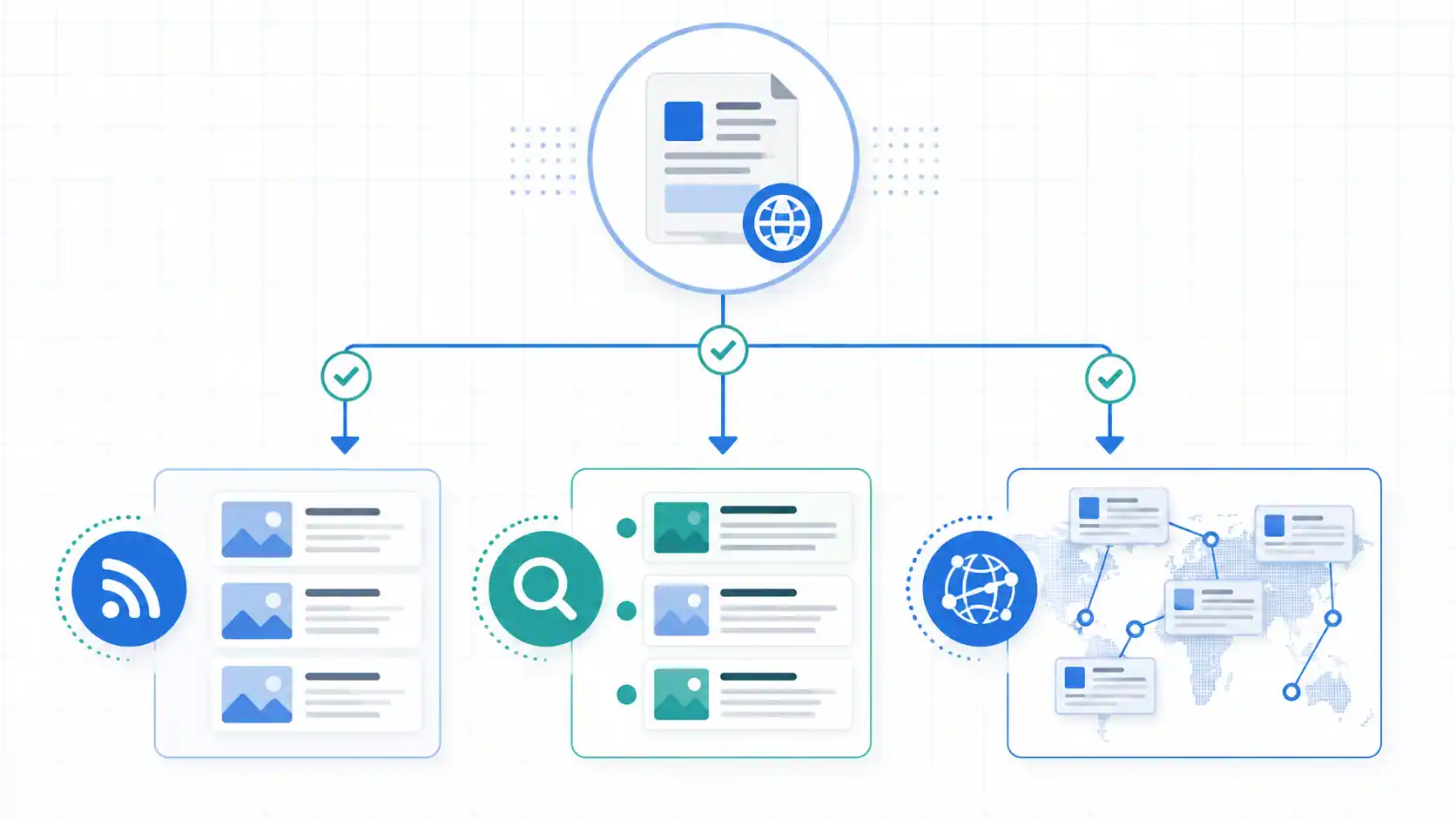
Programmatic access to news is still possible. The right method depends on what you actually need:
- Use Google News RSS for a small, low-volume project that can work with XML and tolerate an undocumented interface.
- Use a third-party Google News SERP API when the application needs results surfaced by Google News in structured form.
- Use an independent news API such as GNews or NewsAPI when the goal is a searchable news database rather than Google’s result set.
- Use Google’s Custom Search JSON API when you need web results from a configured group of sites, not a reproduction of Google News.
That distinction saves more time than comparing endpoint names. Two services can both call themselves a “news API” while returning materially different data.
Official documentation, plan limits, and public prices in this guide were checked on August 26, 2026. Confirm current terms with the provider before committing a production system.
The Best Google News API Option at a Glance
There is no single best choice for every project. Start with the source you need, then compare format, freshness, rights, and cost.
| Option | What it returns | Format | Public entry point reviewed | Best fit | Main limitation |
|---|---|---|---|---|---|
| Google News RSS | Items from a Google News feed or search feed | XML/RSS | No metered API bill or API key | Personal tools, prototypes, simple monitoring | Undocumented as an API; limited fields and no service guarantee |
| SerpApi Google News engine | Parsed results from news.google.com | JSON or Markdown | 250 searches/month free; Starter is $25/month for 1,000 searches | Apps that need Google News result data and U.S. localization | Third-party service, not an official Google API |
| GNews | Articles from GNews's independent news index | JSON | Free: 100 requests/day with a 12-hour delay; Essential is €49.99/month | Search, monitoring, and production feeds that do not need Google's exact results | Free tier is for development/testing; country filter has provider-specific meaning |
| NewsAPI | Articles and headlines from NewsAPI's indexed sources | JSON | Free: 100 requests/day with a 24-hour delay; Business is $449/month | Broad article discovery and U.S. top-headline feeds | Free plan is not licensed for production; full article text is not supplied |
| Google Custom Search JSON API | Web results from a configured Programmable Search Engine | JSON | $5 per 1,000 queries; up to 10,000 queries/day | Searching selected publisher sites or a defined topic set | Official Google API, but not a Google News endpoint |
The numbers in the table come from the providers’ public pages reviewed for this article: SerpApi pricing, GNews pricing, NewsAPI pricing, and Google’s Programmable Search Engine overview.
Do not choose from price alone. A cheap API that returns the wrong dataset is not a bargain.
Does Google News Have an Official API?
No—not a current public one.
Google’s retirement notice says the company deprecated the Google News Search API in 2011 and ended its operation in 2016. The same notice suggested Custom Search as a possible alternative, but that did not turn Custom Search into a News-specific API.
Google’s current Custom Search JSON API documentation describes a service that queries a Programmable Search Engine. A request needs an API key, a search engine ID (cx), and a query (q). It returns configured web-search results. The documentation does not present it as an endpoint for the Google News product.
This creates three common points of confusion:
- A third-party company can sell an API that retrieves Google News results, but the key belongs to that company—not Google.
- GNews is the name of an independent news API. It should not be read as shorthand for an official Google service.
- Google’s Custom Search JSON API is official, but its dataset and purpose differ from Google News.
If a tutorial tells you to create a “Google News API key,” check the endpoint. A googleapis.com endpoint and a key issued through Google Cloud are different from a key issued by a SERP or news-data provider.
What Do You Actually Need From a News API?
The phrase “Google News API” hides several different jobs. Defining the job first makes the selection much easier.
Exact Google News results
Choose this route when placement in Google News matters to the product. Typical use cases include monitoring which publishers appear for a query, reviewing story clusters, tracking a topic in a particular country, or studying the changing Google News result set.
A Google News SERP API is the closest fit because it retrieves and parses what the product displays. Google News RSS can also be useful at a smaller scale, although its output and reliability are more limited.
A searchable database of news articles
Choose a general news API when you care about finding articles, filtering by language or source, retrieving U.S. headlines, or building a news feed without matching Google’s rankings.
GNews and NewsAPI fall into this category. Each maintains its own coverage, fields, limits, and plan rules. A result missing from one provider may exist in another.
Web search across selected publishers
Google Custom Search can make sense when you control the source list. For example, a research team might configure a Programmable Search Engine around a group of industry publications and query those sites through JSON.
That is useful, but it answers “What web pages match this query in my configured engine?” It does not answer “What is Google News showing right now?”
Full-text content for analysis or redistribution
This requirement needs separate scrutiny. Many APIs return a title, publisher, description, image URL, publication time, and article URL. That is not the same as licensed full text.
NewsAPI states that its content field is truncated and its pricing FAQ says full article content is not provided. GNews includes more content on paid plans, but its terms still say third-party articles and images belong to their respective owners.
Before building a commercial archive, model-training dataset, newsletter, or republishing product, check both the API contract and the rights attached to the underlying publisher content.
Free Method: Read Google News RSS With Python
Google News RSS is the simplest way to retrieve a feed without an API key. For U.S. English top stories, the common feed URL is:
https://news.google.com/rss?hl=en-US&gl=US&ceid=US:enFor a keyword search, add an encoded query:
https://news.google.com/rss/search?q=artificial%20intelligence&hl=en-US&gl=US&ceid=US:enThe three localization values serve different purposes:
hl=en-USsets the interface language.gl=UStargets the United States edition.ceid=US:encombines country and language for the edition.
This Python example uses feedparser:
pip install feedparser

from urllib.parse import quote_plus
import feedparser

query = quote_plus("artificial intelligence")
feed_url = (
    "https://news.google.com/rss/search"
    f"?q={query}&hl=en-US&gl=US&ceid=US:en"
)

feed = feedparser.parse(feed_url)

if feed.bozo:
    raise RuntimeError(f"Feed could not be parsed: {feed.bozo_exception}")

for item in feed.entries[:10]:
    print(item.get("title", "Untitled"))
    print(item.get("published", "Publication time unavailable"))
    print(item.get("link", "No link"))
    print("---")
The example is intentionally small. A production process also needs timeouts, retries, logging, deduplication, caching, and a response plan for missing fields.
The example is intentionally small. A production process also needs timeouts, retries, logging, deduplication, caching, and a response plan for missing fields.
Where RSS works well
- A personal reading tool
- A classroom or portfolio project
- A low-volume internal monitor
- A proof of concept before paying for structured results
- A simple alert that only needs a title, time, source label, and link
Where RSS becomes uncomfortable
- Customer-facing products with uptime commitments
- Large query sets or frequent polling
- Workflows that require consistent JSON fields
- Precise pagination or historical archives
- Systems that require direct publisher URLs without an intermediate Google link
- Commercial reuse that needs clear contractual rights
Treat the RSS route as a feed, not as a guaranteed Google API. Google does not publish a service-level agreement for it, and the URL pattern can change.
Get Structured Google News Results With a SERP API
If the application must follow Google News rather than a separate article index, a maintained SERP API is usually the cleaner production route.
SerpApi’s Google News API documentation states that its google_news engine parses results from news.google.com. The response can include structured result information such as titles, sources, links, thumbnails, and publication times. It also supports U.S. localization through gl=us.
Here is a minimal Python request:
import os
import requests

api_key = os.environ["SERPAPI_KEY"]

params = {
    "engine": "google_news",
    "q": "artificial intelligence",
    "gl": "us",
    "api_key": api_key,
}

response = requests.get(
    "https://serpapi.com/search.json",
    params=params,
    timeout=20,
)
response.raise_for_status()
data = response.json()

for item in data.get("news_results", []):
    print(item.get("title"))
    print(item.get("link"))
Store the key in an environment variable or a server-side secret manager. Do not paste a private API key into public JavaScript, a Git repository, a screenshot, or a WordPress page source.
This example uses SerpApi because its documentation clearly distinguishes the Google News engine from ordinary Google Search. It is not an endorsement of one provider for every project. Evaluate coverage, response shape, latency, support, data retention, security requirements, and legal terms before signing up.
Use GNews or NewsAPI for a General News Database
A dedicated news-data API is often a better fit when Google’s ordering is irrelevant.
GNews
GNews’s search endpoint accepts a required query and optional filters such as language, country, dates, and maximum results. For an English-language query from U.S. publishers, a request can look like this:
GET https://gnews.io/api/v4/search?q=artificial%20intelligence&lang=en&country=us&max=10&apikey=API_KEYOne detail is easy to miss: the documentation says the country filter refers to where the returned articles were published; the article subject is not necessarily located in that country. A query for U.S. publishers is not automatically a query for stories about the United States.
The current free plan is useful for development, but it has a 12-hour delay and cannot be used for a commercial project. The Essential plan is the first listed production plan on the pricing page reviewed for this guide.
NewsAPI
NewsAPI offers two main routes:
/v2/everythingfor article discovery and analysis;/v2/top-headlinesfor current headlines by country, category, or publisher.
A basic U.S. headline request is:
GET https://newsapi.org/v2/top-headlines?country=us&apiKey=API_KEYIts free Developer plan allows 100 requests per day, but articles are delayed by 24 hours and the plan is limited to development and testing. The company’s terms explicitly exclude staging and production use on that free plan.
The jump to a paid production plan is substantial, so estimate monthly requests before designing around the service. A poll every five minutes is 8,640 requests in a 30-day month for one query path; ten independently polled paths would use 86,400 requests before retries or manual tests.
That small calculation is more useful than comparing headline plan prices. Request design determines the bill.
Is Google Custom Search a Google News API Alternative?
Sometimes—but only when the requirement is flexible.
Google’s Custom Search JSON API is a current, official Google service. You create a Programmable Search Engine, obtain its search engine ID, and send requests with key, cx, and q.
A request follows this pattern:
GET https://www.googleapis.com/customsearch/v1?key=API_KEY&cx=SEARCH_ENGINE_ID&q=QUERYIt can be useful for:
- searching a known collection of news sites;
- monitoring pages across a defined industry source list;
- building a site-search feature;
- retrieving ordinary web results in JSON.
It is a poor choice when your acceptance test is “the response must match the Google News product.” Custom Search is a different system with a different configuration and result set.
The official overview reviewed for this guide lists a cost of $5 per 1,000 queries and a limit of 10,000 queries per day. Pricing and availability can change, so check the documentation again before implementation.

How to Build a Reliable News API Integration
Getting one successful response is the beginning, not the finished integration.
1. Write an acceptance test before choosing a provider
Collect 20 to 50 queries that represent the real workload. Include breaking topics, narrow company names, ambiguous phrases, U.S.-specific searches, and older stories if history matters.
For each provider, record:
- whether the expected articles appear;
- how quickly new stories arrive;
- how many duplicates are returned;
- which fields are frequently missing;
- whether links go directly to publishers;
- how country and language filters behave;
- how many billable requests the test consumes.
This turns “coverage looks good” into something your team can evaluate.
2. Normalize the response
Do not let every part of the application depend on a vendor’s raw field names. Convert responses into an internal object such as:
{
  "title": "...",
  "publisher": "...",
  "url": "...",
  "published_at": "...",
  "description": "...",
  "image_url": "...",
  "retrieved_at": "...",
  "provider": "..."
}
If a provider changes later, the rest of the product does not need to be rewritten around a new response schema.
3. Deduplicate conservatively
The same wire story may appear on several publisher sites. Google News may also group related reporting that is not actually duplicate content.
Start with normalized canonical URLs when available. Then compare cleaned titles, publisher, and publication time. Do not merge stories solely because their titles share a few words; related coverage can contain different reporting.
4. Cache with the use case in mind
A breaking-news dashboard and a weekly research digest should not poll at the same frequency. Cache identical queries, reuse results where the provider permits it, and set an expiration period that matches the product’s freshness requirement.
Also check the provider’s cache and storage rules. Technical ability to save a response does not override contractual restrictions.
5. Handle failure as normal
News sources remove pages. Publishers change metadata. APIs return rate-limit responses. A field present today may be absent on the next item.
Use timeouts, limited retries with backoff, status monitoring, and a fallback state in the interface. Do not retry a bad request in a tight loop and turn one error into a quota problem.
6. Keep source identity attached
Preserve the publisher name, article URL, publication time, and the provider used to retrieve the record. Those fields help users evaluate the result and help your team trace a correction.
If the feed supports an AI research or SEO workflow, keep the source link with every summary. Our guide to using AI for SEO explains why retrieval speed does not replace human source verification.
7. Review rights before display or redistribution
Google’s current Terms of Service explains that newspaper articles displayed in Google News can belong to other organizations and may not be used without permission or another lawful basis.
The same distinction appears in API-provider terms. NewsAPI’s terms prohibit using its service to reproduce or republish copyrighted material, while GNews’s terms say third-party articles and images remain the property of their respective owners.
An API can solve retrieval. It cannot grant rights the provider does not own.
Common Google News API Mistakes
Calling every news service “Google News”
An independent news index may be useful, but it is not the Google News result set. Label the source accurately in product requirements, documentation, and user-facing copy.
Building production around a development-only plan
GNews and NewsAPI both restrict their free plans. A prototype that works locally may need a paid plan before it can be published or used internally in production.
Exposing an API key in front-end code
Browser code, public repositories, and WordPress page markup can expose a key. Send requests through a controlled back end, restrict the key where the provider supports restrictions, and rotate it if it leaks.
Treating the country parameter as universal
One provider may use country to describe the publisher, another may use it for a regional edition, and a SERP service may use it to localize the Google News interface. Read the definition for the exact endpoint.
Assuming an API result is verified reporting
An API transports data. It does not independently prove that every source or claim is accurate. High-stakes facts still need confirmation from the original reporting and, where possible, primary evidence.
Publishing automated rewrites
Turning every retrieved article into a thin summary creates copyright, quality, and search problems. Use monitoring data to find developments worth researching; do not treat it as a machine for republishing other organizations’ work.
That principle also applies to social publishing. A useful social media marketing strategy needs an audience, purpose, editorial decision, and measurement plan—not merely a stream of automatically reposted headlines.
Optimizing for volume instead of usefulness
An API makes it easy to generate hundreds of pages. It does not make those pages original or valuable. If the output is intended for search, review our practical SEO strategies for 2026 before converting a data feed into indexable URLs.
A Production-Readiness Checklist
Before committing to a Google News API alternative, confirm the following:
- The team has defined whether it needs Google News results or general news data.
- U.S. localization has been tested with representative queries.
- Required fields are present often enough for the product.
- Freshness was measured rather than assumed.
- The free or paid plan permits the intended environment.
- Monthly cost was modeled using polling frequency, pagination, retries, and growth.
- API keys stay server-side and can be rotated.
- Rate limits, timeouts, and error responses are handled.
- Duplicate and related stories are treated separately.
- Publisher attribution and original URLs remain attached.
- Storage, caching, display, and redistribution follow the relevant terms.
- Full-text or image rights have been confirmed independently.
- A provider outage or product change has a documented response.

If several of these answers are unknown, the project is still in evaluation—not production.
Frequently Asked Questions
Is there an official Google News API in 2026?
No. Google shut down the deprecated Google News Search API on February 15, 2016. Current options include Google News RSS, third-party APIs that parse Google News, independent news databases, and Google’s non-News-specific Custom Search JSON API.
How do I get a Google News API key?
You cannot request a current official Google News API key because Google does not offer that product. A key advertised for a “Google News API” normally comes from a third-party SERP or news-data provider. Check who operates the endpoint before creating an account.
Is Google News API free?
There is no official API plan to price. Google News RSS can be read without an API key or metered API bill, but it is not a documented API with a service guarantee. Third-party providers may offer limited free plans or trials under their own terms.
Can I use Google News in Python?
Yes. Python can parse a Google News RSS feed or call a third-party JSON API. RSS is the simplest free starting point; a maintained API is generally easier when a production application needs structured fields, localization, support, and predictable errors.
Is GNews the same as Google News?
No. GNews is an independent news API and company. It provides a searchable article index, but it is not operated by Google and should not be described as an official Google News endpoint.
Is NewsAPI a Google product?
No. NewsAPI is an independent service that indexes articles and headlines from publishers and blogs. It can provide U.S. headlines and keyword search, but its result set is not Google’s News ranking.
Does Google Custom Search return Google News results?
Google Custom Search returns web results from a configured Programmable Search Engine. It can search selected news sites, but Google does not document it as a replacement endpoint for the Google News product or a way to reproduce Google News rankings.
Can a news API provide full article text?
Some paid services expose more article content than others, but availability and usage rights are separate issues. NewsAPI does not provide full article text. Even when text or images are technically returned, review the provider’s terms and the publisher’s rights before storing, displaying, or redistributing them.
Which option is best for U.S. news data?
When exact Google News results and U.S. localization matter, a Google News SERP API is the strongest fit. GNews or NewsAPI makes more sense if a broad, independent article database meets your needs. RSS can handle a small experiment where some limitations are acceptable. Custom Search works better when you need to search a controlled collection of websites.
Final Recommendation
Do not begin with a vendor. Begin with the result set.
For products that must reflect Google News results, start with RSS for a small experiment and consider a maintained Google News SERP API for production. Products that only need searchable news articles should compare independent databases using real queries.
A configured Custom Search engine may be enough when you already know which publishers matter.
Then test the unglamorous parts: missing fields, duplicates, delayed stories, broken links, rate limits, plan restrictions, and content rights. Those details decide whether an integration remains useful after the demo.
The phrase “Google News API” sounds like one product. In practice, it is a decision between several different ways of getting news data. Choose the source that matches the job, label it honestly, and build the rest of the system around evidence rather than the name on the search query.
If an endpoint, public price, or plan restriction in this guide has changed, please contact the editorial team so the source can be reviewed.