


Table of Contents
- What SEO Looks Like in 2026
- 1. Get the Search Intent Right Before You Optimize Anything
- 2. Build Around Topics, Not Isolated Keyword Variations
- 3. Publish Content That Has a Reason to Exist
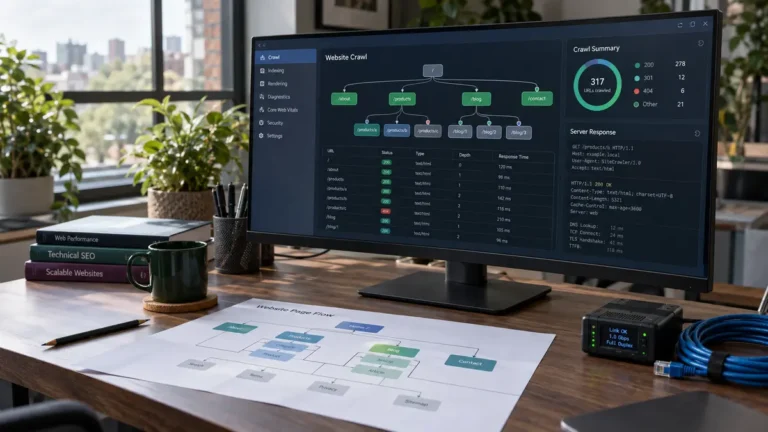
- 4. Make On-Page SEO Clear, Not Mechanical
- 5. Fix Technical Problems Before They Become Content Problems
- 6. Improve Core Web Vitals Without Turning Performance Into a Game
- 7. Use Internal Links to Build a Site, Not a Pile of Posts
- 8. Earn Links by Giving Other Websites a Reason to Mention You
- 9. Prepare for AI Overviews and AI Mode by Improving the Same Things That Help SEO
- 10. Use Real Search Data to Decide What to Improve Next
- Where Local SEO Fits
- Which SEO Work Should Come First?
- SEO Tactics That Are Not Worth Building a Strategy Around
- A Practical SEO Checklist for 2026
- Frequently Asked Questions
- Final Thoughts
The strongest sites usually get several fundamentals right at once: they answer the searcher’s question clearly, keep important pages easy to discover, publish content with real value, connect related pages naturally, and give readers good reasons to trust the information. And they pay attention to what real search data is telling them.
That matters because there is a lot of noise around SEO right now. Every new search feature seems to create a new acronym, a new checklist, or a new promise that the old rules no longer apply. Google’s own documentation tells a more grounded story. Its guidance for AI features says that established SEO fundamentals still apply and that there is no special AI schema or separate technical requirement for appearing in AI Overviews or AI Mode.
So this is not a list of “2026 hacks.” It is a practical framework for making a website more competitive in search today.
The strategies below apply to blogs, service businesses, publishers, e-commerce sites, and most other websites that depend on organic visibility.
What SEO Looks Like in 2026
Search is changing, but not in the way some headlines suggest.
Google can now use generative AI to explore and answer certain queries, yet a page still needs to be discoverable, indexable, relevant, and useful before it can become a meaningful search result. Google’s guidance for AI features says pages shown as supporting links in AI Overviews or AI Mode must be indexed and eligible to appear in Search with a snippet.
In other words, AI search has added another layer to SEO. It has not erased SEO.
That distinction is useful because it keeps the focus where it belongs: on the searcher, the content, the website, and the evidence you can actually measure.
1. Get the Search Intent Right Before You Optimize Anything
A page can have a strong title, clean technical SEO, good backlinks, and still miss the mark if it answers the wrong question.
That is why search intent should come before keyword placement.
Search intent is simply the reason someone searched. Most queries fall into one or more broad categories:
- Informational: the person wants to learn something or solve a problem.
- Commercial: they are comparing options before making a decision.
- Transactional: they are ready to buy, book, subscribe, download, or take another action.
- Navigational: they are trying to reach a specific brand, website, or page.
The difference becomes obvious when you compare two searches:
how to improve wordpress site speed
and
best wordpress speed optimization service
The first query calls for a tutorial. The second is much closer to a buying decision. Trying to rank the same generic article for both usually creates a page that does neither job particularly well.
Read the SERP Like a Searcher
Before you outline a page, search the main query and look at what is actually ranking.
Do not just count headings or copy the format of the first three results. Look for patterns:
- Are most results guides, service pages, product pages, tools, videos, or list posts?
- Are the top pages recent, or has the SERP remained stable for years?
- Which questions keep appearing?
- Are people being shown local results, shopping results, forums, videos, or AI answers?
- What would you still want to know after reading the current top results?
That last question is where the real opportunity often sits.
Google’s people-first content guidance encourages original information, reporting, research, analysis, and substantial value. Reproducing the structure of pages that already rank may help you understand the SERP, but it does not give Google or the reader a reason to prefer your page.
A useful test before writing is to finish this sentence:
A person searching this query wants to ________.
If you cannot complete that sentence clearly, the page probably is not ready to be written.
2. Build Around Topics, Not Isolated Keyword Variations
Keyword research still matters. What has changed is the way those keywords should shape a page.
A good page is not a storage box for one exact-match phrase and ten variations of it. It is a solid resource about a subject.
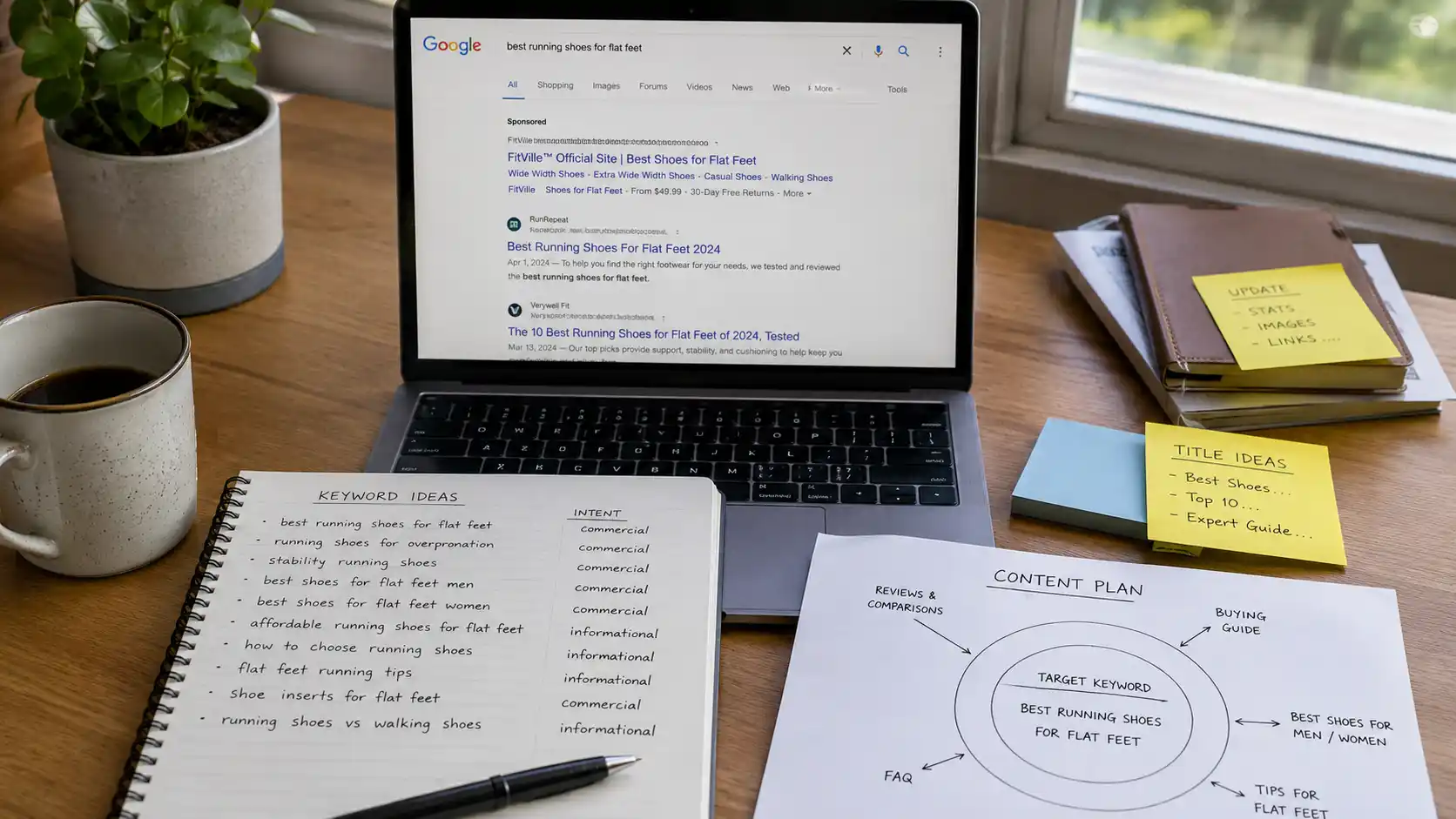
Start with the main query, then look at the language surrounding it: related questions, common problems, comparisons, prerequisites, terminology, and the next question a reader is likely to ask.
Take technical SEO as an example. A serious guide may naturally touch on crawling, indexing, canonical tags, sitemaps, robots directives, JavaScript, structured data, internal linking, and Core Web Vitals. Those topics belong there because they help explain technical SEO not because a content tool produced a list of terms to insert.
One Intent Usually Deserves One Main Page
One of the easiest ways to create SEO problems is to publish several pages that are all trying to rank for essentially the same thing.
Before creating a new URL, ask whether the query needs a genuinely different answer.
If two keywords have the same intent, the stronger move may be to cover them on one well-built page. If the intent is clearly different, separate pages make more sense.
This is also where topic clusters can be useful. A broad SEO hub, for example, might connect to deeper pages on technical SEO, keyword research, internal linking, link building, Core Web Vitals, and AI search. The point is not to manufacture a cluster for the sake of “topical authority.” The point is to make the site easier to explore.
Stop Treating “LSI Keywords” as a Requirement
You do not need a separate LSI-keyword checklist.
Use accurate language. Mention related concepts when they belong in the explanation. Put the words people actually use in prominent places such as titles, headings, link text, and image alt text where appropriate.
Google’s Search Essentials recommends using words people would use to find your content. That is a much more useful rule than chasing an artificial term frequency.
The practical takeaway is simple: map keywords to pages, but build the page around the subject and the user’s need.
3. Publish Content That Has a Reason to Exist
This is probably the hardest part of SEO in 2026.
It is also the part that gets reduced most often to vague advice such as “write high-quality content.”
The problem is that a page can be well written and still be completely replaceable.
If ten other websites already explain the same topic with the same examples, same structure, and same conclusions, polishing an eleventh version does not create much additional value.
Before publishing, ask a more useful question:
What does this page contribute that a reader would not get from a generic summary of the current SERP?
That contribution does not always need to be a large research project. It could be:
- a real workflow;
- a real screenshot that clarifies the process;
- an original example;
- a test or experiment;
- a transparent case study;
- first-hand observations;
- expert commentary;
- proprietary data;
- a template;
- a practical decision framework;
- original photos or video;
- a clearer explanation of something competitors make unnecessarily complicated.
A competitive article needs a reason to exist.
E-E-A-T Is a Quality Lens, Not a Scorecard
Experience, Expertise, Authoritativeness, and Trustworthiness are useful ideas for evaluating content, especially on topics where accuracy matters.
They should not be treated as a hidden number that can be increased by adding an author box and a few citations.
Trust is built through the page and the site as a whole. Clear authorship helps. Relevant credentials help. Good sourcing helps. So do transparent corrections, meaningful update dates, and information about who is responsible for the website.
Google’s helpful-content documentation also makes another point that is easy to overlook: Google does not have a preferred word count.
That is worth remembering when competitors publish 4,000-word guides. A longer article is not automatically a stronger article. If the topic is complex, depth is useful. If the answer is simple, padding it with another 1,500 words is not.
Where AI Fits Into Content Production
AI can be useful in the editorial process. It can help organize research, surface questions, compare information, clean up a draft, or handle repetitive tasks.
The quality standard does not change because AI was involved.
The final content still needs to be accurate, useful, original enough to justify the page, and reviewed by someone capable of catching bad claims. Google’s spam policies focus on manipulative, low-value production at scale not on rewarding or punishing a page simply because a particular writing tool was used.
The safer question is not “Was AI used?” It is “Would this page still be worth publishing if search engines did not exist?”
4. Make On-Page SEO Clear, Not Mechanical
On-page SEO should make a page easier to understand. If it starts making the writing awkward, something has gone wrong.
The title, H1, introduction, headings, images, internal links, and structured data should all point in the same direction. They do not need to repeat the same keyword word-for-word.
Write Titles for the Result Page, Not Just the Keyword Tool
A title has two jobs: describe the page accurately and give the right searcher a reason to click.
That usually means the title should include the main topic, but it should also sound like something a person would choose from a SERP.
Avoid stacking variations into the same title. Avoid claims such as “guaranteed,” “ultimate,” or “best ever” unless the content can actually support them.
The same principle applies to the introduction. A useful opening gets to the point. It tells the reader what problem is being solved and why the rest of the page is worth their time.
Use Headings to Organize the Argument
A clean hierarchy is enough:
- one H1 for the page;
- H2s for major sections;
- H3s where a section genuinely needs to be broken down further.
Headings should make sense even to someone skimming the page. They do not need to be keyword variations disguised as subheadings.
Do Not Ignore Image SEO
Images can improve comprehension and accessibility, and they can create additional discovery opportunities.
For important images, use descriptive filenames where practical, compress them properly, serve appropriate sizes, write meaningful alt text, and specify dimensions so the layout does not jump while the page loads.
Modern formats such as WebP are useful when they fit the workflow, but image optimization is not just about format. A 2500-pixel image displayed at 600 pixels wide is still wasteful.
Structured Data Helps With Meaning, Not Guarantees
Structured data can help Google understand eligible content and make a page eligible for certain search features. It does not guarantee a rich result.
Google’s structured data guidelines require the markup to represent the visible content accurately.
Use the schema type that actually matches the page. Then test it. Adding every possible markup type to every article is not a strategy.
5. Fix Technical Problems Before They Become Content Problems
Technical SEO tends to be invisible when it works and very visible when it does not.
A well-written page cannot compete if search engines cannot reach it, process it, or index it correctly.
Start with the basics.
Can Google crawl the URL? Is the page indexable? Does it have the correct canonical? Can a crawler reach it through normal internal links? Are you accidentally blocking important resources? Are redirects clean?
Google’s link best practices make a simple point that is still easy to miss: crawlable links help Google discover pages and understand relationships between them.
Watch for the Problems That Quietly Waste Crawl and Signals
Common issues include:
- orphan pages;
- broken internal links;
- accidental
noindexdirectives; - blocked pages or resources;
- redirect chains;
- inconsistent canonical signals;
- duplicate URL versions;
- important content that only appears after problematic JavaScript interactions.
Not every warning from an audit tool deserves the same urgency.
A canonical problem on an important service page matters more than a minor issue on an archive nobody uses. Prioritize by impact.
XML Sitemaps Are Helpful, but They Are Not Site Architecture
An XML sitemap can help search engines discover important canonical URLs, especially on large sites.
It should not be the only way an important page can be found.
If a page matters, users and crawlers should normally be able to reach it through the site itself.
Check Important URLs in Search Console
“Published” does not mean “indexed.”
For pages that matter, use Google Search Console to check indexing status and diagnose problems instead of assuming the crawler will eventually sort everything out.
Technical SEO does not need to become an endless audit cycle. Fix the issues that stop discovery, create duplication, waste crawling, or make important pages unreliable.
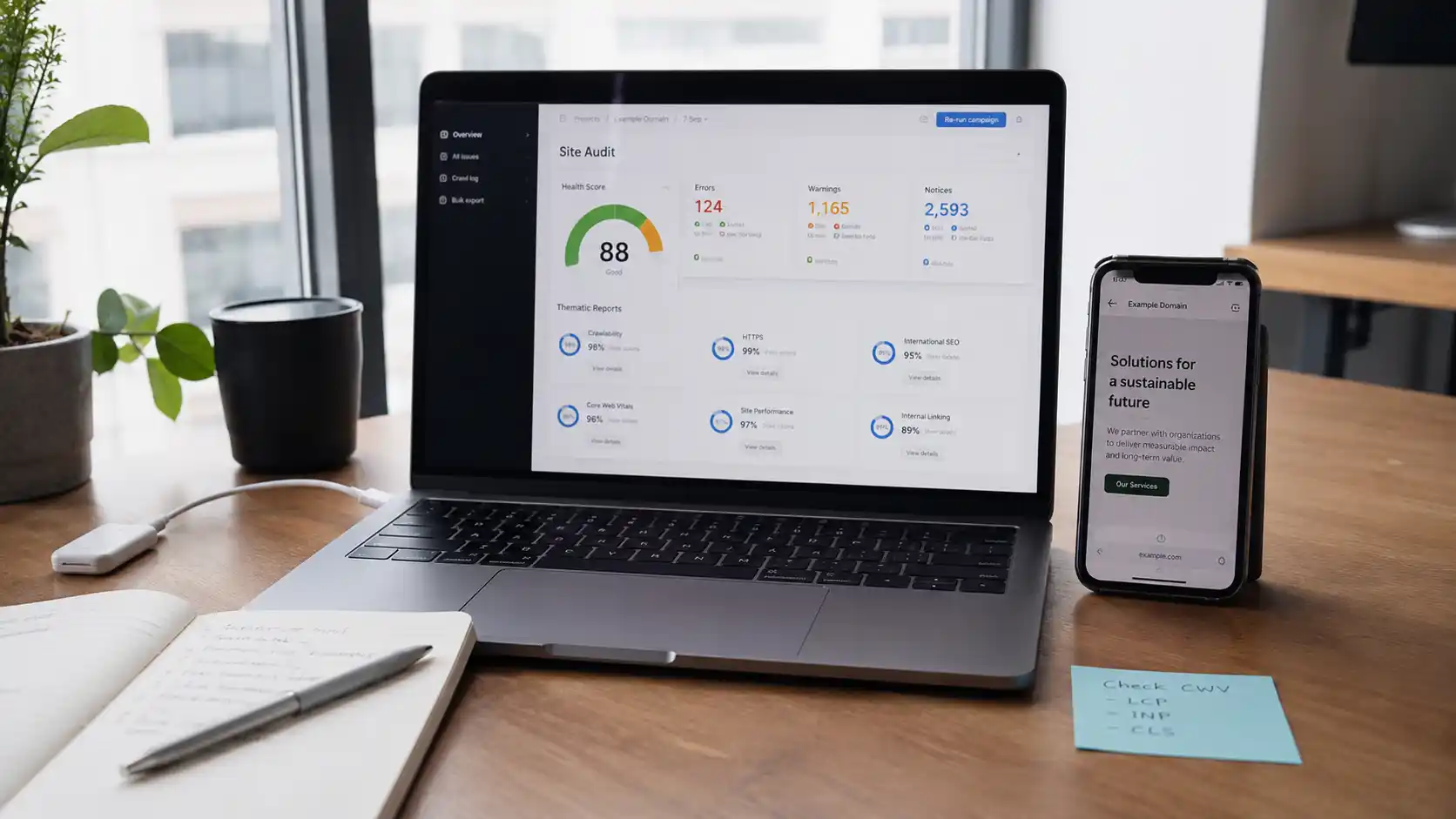
6. Improve Core Web Vitals Without Turning Performance Into a Game
Core Web Vitals matter, but a perfect score is not the goal of SEO.
The goal is a page that loads, responds, and stays visually stable for real users.
Google’s current Core Web Vitals focus on:
- Largest Contentful Paint (LCP): loading performance. A good result is within 2.5 seconds.
- Interaction to Next Paint (INP): responsiveness. A good result is below 200 milliseconds.
- Cumulative Layout Shift (CLS): visual stability. A good result is below 0.1.
Those thresholds come from Google’s Core Web Vitals documentation.
A few practical fixes solve a surprising number of problems:
- resize oversized images before uploading them;
- serve responsive image sizes;
- reduce unnecessary JavaScript;
- review third-party scripts;
- use caching properly;
- improve server response time where it is genuinely slow;
- reserve space for images, embeds, and ads;
- delay non-critical resources where appropriate.
But do not remove useful features from a website just to make a testing tool turn green.
Good Page Experience Is Bigger Than Three Metrics
A page can pass Core Web Vitals and still be unpleasant to use.
Think about mobile navigation, intrusive overlays, aggressive ad placement, unreadable text, broken tables, buttons that are hard to tap, and layouts that overflow the screen.
Google’s page-experience guidance makes the same broader point: there is no single page-experience signal that replaces useful content.
Use field data when you can. A real user struggling with a page matters more than a perfect lab score on a device configuration none of your visitors use.
7. Use Internal Links to Build a Site, Not a Pile of Posts
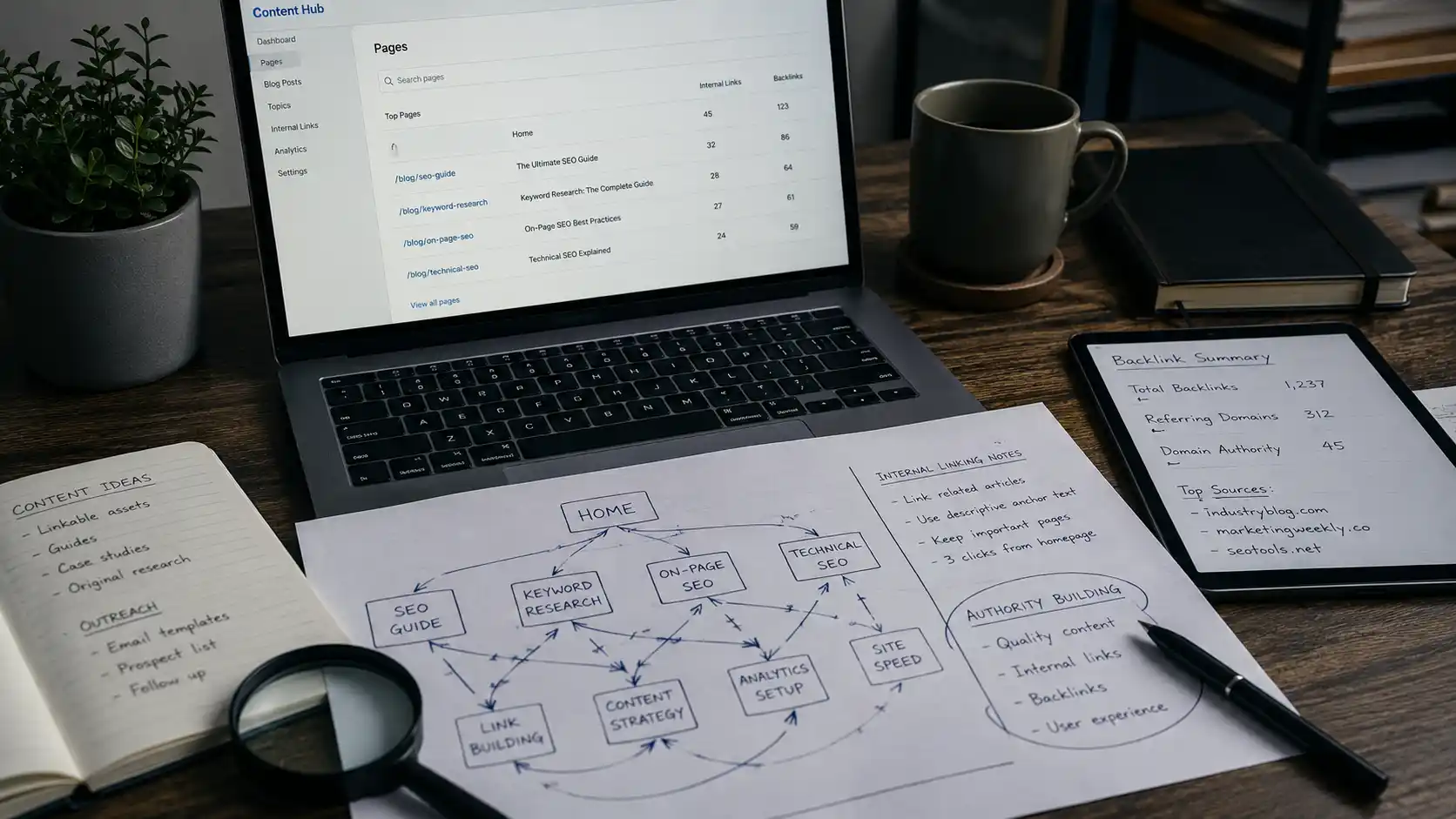
Internal linking is one of the few SEO levers a site owner controls completely.
Done well, it helps users move naturally through the website and gives search engines clearer paths between related pages. Done badly, it looks like a paragraph full of forced anchors.
The best internal link is usually obvious in context.
If a reader reaches a point where a deeper explanation would help, link to it. If another article answers the next likely question, link to that.
For example, readers who want to go deeper into how AI fits into modern search can continue with our guide to the foundational elements for SEO with AI.
That link makes sense because it extends the topic. It is not there to hit an internal-link quota.
Anchor Text Should Tell the Reader What Comes Next
“Click here” wastes useful context.
Descriptive anchor text is better because the reader knows what to expect and the relationship between the two pages is clearer.
That does not mean every link needs an exact-match keyword. Natural language is fine.
When you publish or update an important article, also look backward. Which older pages could now link to this one naturally? Which established articles already have traffic or backlinks and could help readers discover the new resource?
This is where many sites leave value on the table. They add links out of a new post but forget to add links into it.
Orphan pages are another easy win. If a valuable page has no meaningful internal links pointing to it, fix that before assuming it needs another round of rewriting.
8. Earn Links by Giving Other Websites a Reason to Mention You
Backlinks still matter, but raw link count is a poor way to think about authority.
A legitimate, relevant editorial mention can be far more useful than dozens of links built only to move a third-party metric.
Google’s Search Essentials explains that links help with discovery and understanding. Its spam policies also make it clear that schemes designed primarily to manipulate rankings can create problems.
The safest long-term link strategy begins before outreach: create something worth citing.
That might be:
- original research;
- an industry survey;
- a useful dataset;
- a calculator or free tool;
- a template;
- original statistics;
- a visual explainer;
- expert commentary;
- a strong reference guide;
- a transparent case study.
If the page says nothing new, outreach becomes an exercise in asking for favors. If the page contains something useful, the pitch has a reason to exist.
Use Third-Party Authority Metrics as Clues, Not Truth
Domain Authority, Domain Rating, and similar scores can be useful when comparing websites. They are not Google ranking scores.
A better link-quality check is more basic:
Is the site legitimate? Is the page relevant? Does it appear to have a real audience? Is the mention editorially sensible? Would you still want the link if the SEO score was hidden?
That last question filters out a lot of bad opportunities.
Also, do not automatically disavow every strange link that appears in a backlink report. Unfamiliar does not automatically mean harmful, and a third-party “toxicity” label is not enough evidence on its own.
9. Prepare for AI Overviews and AI Mode by Improving the Same Things That Help SEO
AI search deserves attention. It does not require abandoning everything that came before it.
Google’s AI features documentation says there are no additional technical requirements for appearing in AI Overviews or AI Mode. A supporting page needs to be indexed and eligible to appear in Search.
The familiar fundamentals still show up in Google’s guidance:
- crawlable pages;
- clear text content;
- sensible internal links;
- good page experience;
- structured data that matches visible content;
- accessible information;
- original, trustworthy content.
There is no secret “AI schema” that bypasses those requirements.
Write Clearly Enough to Be Understood Without Flattening the Content
Useful content does not need to sound like a FAQ bot.
Answer the main question clearly, define technical terms, use descriptive headings, and break complex processes into logical steps. Use tables or lists where they genuinely make something easier to understand.
Then keep the depth.
AI search makes generic summaries cheap. That makes first-hand experience, original data, expert analysis, real examples, useful visuals, and well-supported explanations more valuable not less.
The important part is not the label attached to the tactic. It is whether the page is accessible, clear, original, and worth referencing.
Check Search Console if the New AI Reporting Is Available to You
Google has been rolling out dedicated generative-AI controls and reporting in Search Console to a subset of site owners.
Where available, the Search generative AI control lets a site owner manage whether site content can be used as supporting material in certain generative Search experiences. Google says that control is not used as a ranking or inclusion signal for other parts of Search.
The dedicated Generative AI performance report can show impressions from supported generative Search features and break them down by dimensions such as page, country, device, and date.
Because the rollout is gradual, not every property will see these options yet. If they are available in your Search Console account, use them as another measurement layer rather than treating them as a replacement for normal Search performance data.
Official references: Search generative AI control and Generative AI performance report.
10. Use Real Search Data to Decide What to Improve Next
One of the biggest differences between a new page and an established page is data.
Once a URL has been indexed and has started receiving impressions, you no longer need to guess about everything. Search Console can show which queries trigger the page, where impressions are coming from, which devices are involved, and whether performance is improving or declining.
That makes content updates much more useful.
High Impressions but Weak Clicks
Start by checking the queries.
Do not look at CTR in isolation and assume the title is automatically the problem.
A Page Sitting Just Outside the Top Results
Pages around positions 11–20 are often worth investigating because they already have some visibility.
Review the actual competitors and ask:
- Does the page still match the intent?
- Has information become outdated?
- Is an important section missing?
- Are stronger internal links available?
- Is the page technically sound?
- Have competitors added original evidence or better examples?
- Does the page have enough legitimate authority to compete?
There is no guaranteed “position 12 to position 5” checklist, but there is usually something concrete to inspect.
Traffic Drops Need Diagnosis, Not Panic
Google’s guide to debugging Search traffic drops points to several possible causes, including technical problems, algorithmic changes, security issues, seasonality, and shifts in search interest.
A traffic decline does not automatically mean “rewrite the article.”
A traffic drop can happen for several reasons. The content may be outdated, search intent may have shifted, a technical issue could be limiting visibility, or interest in the topic may simply have declined.
A Real Content Refresh Should Change the Content
A meaningful update can involve correcting old information, adding a missing section, removing obsolete advice, improving examples, adding evidence, updating screenshots, fixing broken links, strengthening internal links, or consolidating overlapping pages.
Changing only the date is not a content strategy.
Google’s people-first guidance specifically warns against changing dates merely to make pages appear fresh when the content has not substantially changed.
And remember that rankings are not the final business outcome. Leads, purchases, subscriptions, downloads, assisted conversions, and engagement with important pages often matter more than a position number on its own.
Where Local SEO Fits
Local SEO matters a lot when a business serves customers in a defined geographic area. It simply is not equally relevant to every website, which is why it does not need to occupy one of the universal top 10 slots above.
For a local service business, the priorities often include:
- an accurate Google Business Profile;
- correct contact information and opening hours;
- genuine customer reviews;
- useful service and location information;
- relevant local mentions and links;
- consistency between the website and business profiles.
For a practical example of how local visibility fits into a wider marketing plan, see our guide to digital marketing for plumbers.
Be careful with location pages. Publishing dozens of nearly identical city pages with only the place name changed rarely makes the website more useful. A location page should contain information that genuinely matters to people in that area.
Which SEO Work Should Come First?
There is no universal order that fits every site.
A revenue page accidentally set to noindex should be fixed before you spend time publishing another article. A technically healthy site with weak, generic content needs stronger editorial work instead. When valuable pages are buried deep in the site with little or no internal linking, improving the site architecture may deliver the fastest gains.
As a general starting point, this order is sensible:
| Priority | Focus | Why it matters |
|---|---|---|
| 1 | Crawlability and indexability | A page cannot compete if search engines cannot access or index it. |
| 2 | Search intent | The page has to solve the right problem. |
| 3 | Original content value | The page needs a reason to be preferred over similar results. |
| 4 | On-page clarity | Titles, headings, copy, and media should make the purpose obvious. |
| 5 | Internal linking | Helps discovery and connects related content. |
| 6 | Page experience | Removes usability and performance friction. |
| 7 | Relevant authority | Legitimate links and mentions strengthen credibility and discovery. |
| 8 | AI-search readiness | Strong SEO plus clear original information supports newer search experiences. |
| 9 | Measurement and refreshes | Real data tells you what deserves work next. |
Use the table as a starting point, not a rigid formula.
SEO Tactics That Are Not Worth Building a Strategy Around
Some ideas survive because they are easy to measure, not because they are especially useful.
Be cautious with:
- fixed keyword-density targets;
- “LSI keyword” checklists;
- exact-match keyword stuffing;
- arbitrary article word counts;
- mass-produced low-value pages;
- copied competitor structures with no additional value;
- buying links primarily to manipulate rankings;
- treating third-party authority scores as Google scores;
- automatically disavowing links because a tool labels them “toxic”;
- adding schema that does not match visible content;
- changing dates without meaningful updates;
- creating several pages for the same intent;
- chasing perfect Core Web Vitals while the content remains weak;
- treating GEO or AEO as a replacement for basic Search eligibility.
A useful rule is this: if an SEO tactic makes the page less helpful, less natural, or less trustworthy for a real person, it deserves extra scrutiny.
A Practical SEO Checklist for 2026
Before publishing or substantially updating an important page, check the basics:
- Does the page have one clear primary intent?
- Does the format match what the searcher is trying to do?
- Is the topic obvious from the title, H1, and opening?
- Does the page add something beyond a generic summary?
- Are factual claims accurate and properly sourced where necessary?
- Is authorship clear?
- Can Google crawl and index the page?
- Are canonical and robots signals correct?
- Can users reach the page through relevant internal links?
- Does the page link naturally to useful supporting content?
- Is the mobile experience clean?
- Are important images compressed and described properly?
- Does structured data match what is visible on the page?
- Is the page easy to use in practice?
- Is there any reason another website would want to cite or recommend it?
- Are Search Console data and real business outcomes informing future updates?
You do not need to turn this into a ritual for every minor page. Use it for the URLs that actually matter.
Frequently Asked Questions
What is the most important SEO strategy in 2026?
There is no single tactic that guarantees rankings. A strong starting point is to match search intent with useful, original content and make sure the page is crawlable and indexable. Technical quality, internal links, page experience, and authority support that foundation.
Does Google prefer human-written content over AI-generated content?
Google’s public guidance focuses on quality, usefulness, originality, and intent rather than giving a blanket ranking advantage to a specific writing method. Low-value content produced at scale to manipulate rankings can violate spam policies. Whatever tools are involved, the final page still needs editorial judgment and factual review.
Is E-E-A-T a direct ranking factor?
Not as one standalone score you can optimize. E-E-A-T is better understood as a quality framework reflected in Google’s guidance. Clear authorship, relevant experience, good sourcing, and trustworthy publishing practices can all make content stronger.
Do Core Web Vitals affect rankings?
Google says Core Web Vitals are used by its ranking systems, but good scores do not guarantee top rankings. They are part of a broader page-experience picture.
Do I need GEO to appear in AI Overviews?
Google says there are no additional technical requirements or special schema needed for AI Overviews or AI Mode. A page still needs to be indexed and eligible to appear in Search, and Google continues to recommend established SEO practices.
How long should an SEO article be?
Long enough to satisfy the search intent properly, and no longer than it needs to be. Google says it does not have a preferred word count.
How long does SEO take?
There is no reliable universal timeline. Competition, site history, technical health, content quality, crawling, authority, and query demand all affect results. Fixed promises such as “rank in 30 days” should be treated with caution.
Final Thoughts
SEO in 2026 is more sophisticated, but it is not mysterious.
The websites with the strongest long-term position are usually the ones doing several things well at the same time: understanding what people search for, publishing information that genuinely helps, keeping the site technically accessible, building clear relationships between pages, earning credible mentions, and improving what already exists instead of constantly chasing the next tactic.
AI Overviews and AI Mode have changed the shape of some search journeys. They have not changed the basic requirement that a page needs to be worth finding.
That is the standard to aim for.
Do not publish another page simply because the keyword has volume. Build the page because you can answer the query better, more clearly, or with more useful evidence than what is already available. Then make sure Google can find it, understand it, and see how it fits into the rest of your site.
That approach is less exciting than an SEO hack. It is also much harder for competitors to copy.